
Walk down almost any street in Bangkok and you'll encounter one of the city's most persistent and overlooked forms of pollution. It isn't smog. It isn't litter. It isn't traffic congestion. It's bike noise.
Every day, millions of Bangkok residents are subjected to an endless barrage of deafening motorcycle exhausts. Modified pipes scream through residential neighbourhoods at dawn. Riders accelerate aggressively through busy shopping districts. Children are startled awake. Elderly residents lose sleep. Office workers struggle to concentrate. Entire communities are forced to endure noise levels that would never be accepted in many other major cities around the world.
While Bangkok has made significant progress in improving public transport, modernising infrastructure, and enhancing public spaces, one quality-of-life issue remains largely unresolved: illegal motorcycle exhaust systems.
The solution may be far simpler than most people realise.
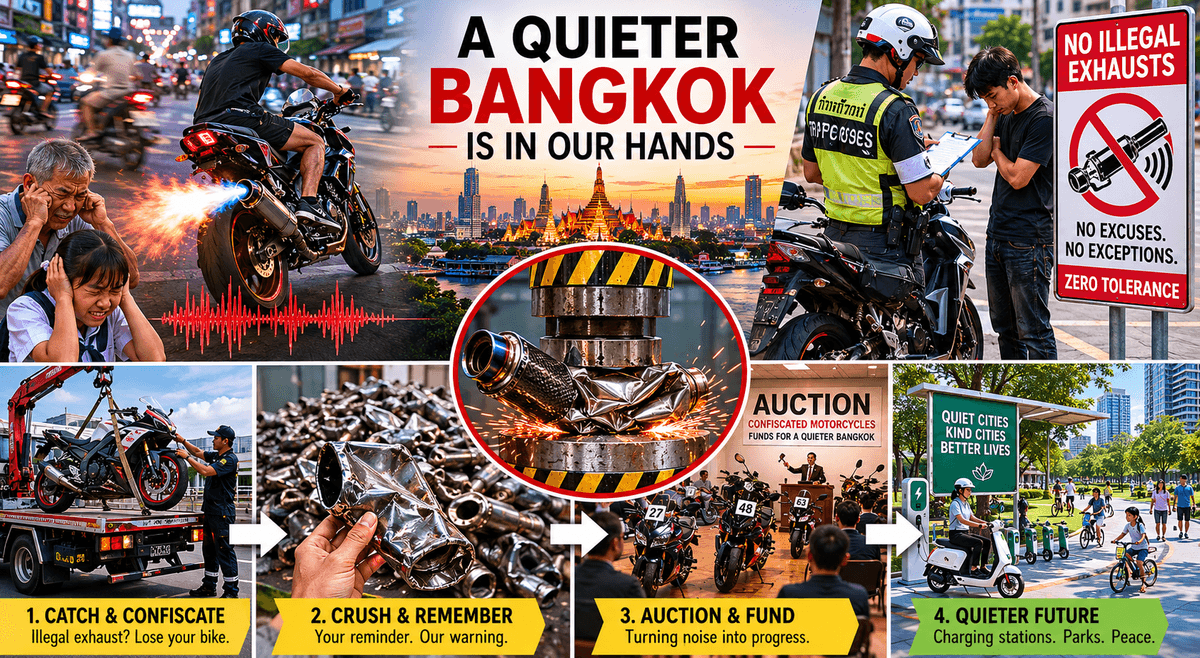
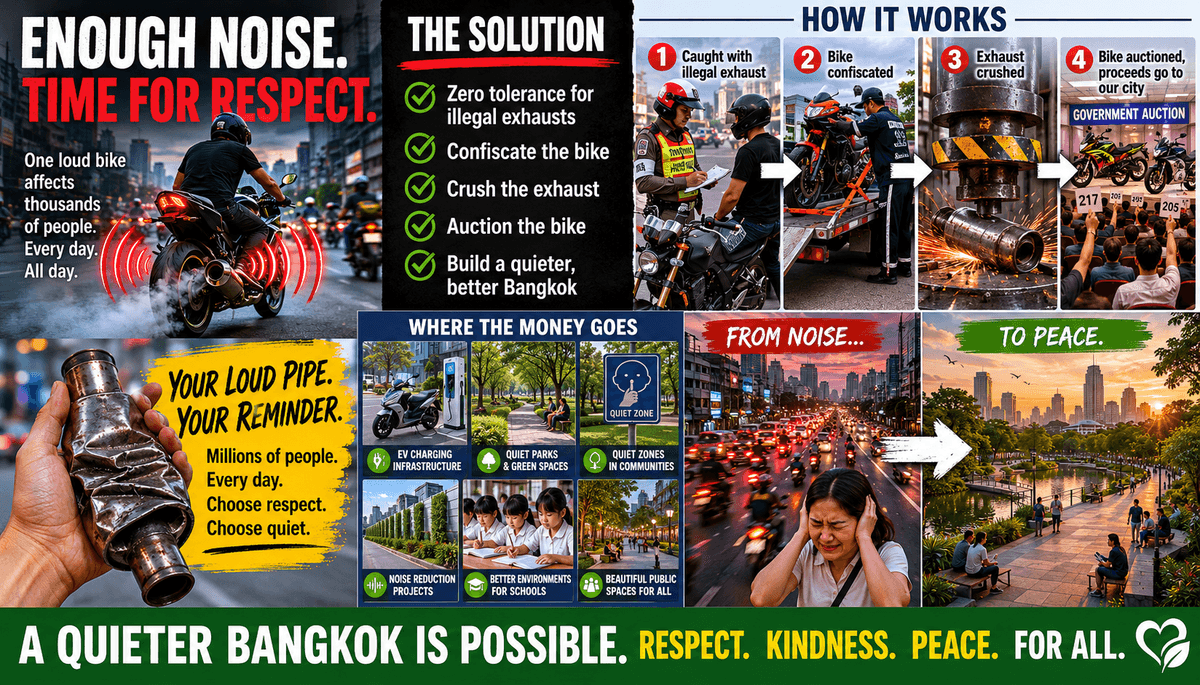
If a rider is caught using an illegal exhaust, the motorcycle should be permanently confiscated. The exhaust should be crushed and returned to the owner as a reminder of the consequences of anti-social behaviour. The confiscated motorcycles should then be auctioned, with the proceeds used to fund electric motorcycle infrastructure and the creation of quiet public spaces throughout the city.
It may sound tough.
But when millions of innocent people are affected every single day, perhaps it is time for a policy that matches the scale of the problem.

Noise Pollution Is Not a Minor Issue
Many people dismiss motorcycle noise as a simple annoyance.
In reality, excessive noise pollution is a serious public health concern.
Numerous studies have linked chronic exposure to high noise levels with increased stress, elevated blood pressure, poor sleep quality, reduced concentration, anxiety, and a diminished overall quality of life.
Unlike other forms of pollution, noise is uniquely invasive. Residents cannot simply close their eyes to it. It enters homes, schools, hospitals, parks, restaurants, and workplaces.
One rider with an illegally modified exhaust can disrupt hundreds of people in a matter of seconds.
Multiply that by thousands of motorcycles operating across Bangkok every day and the scale of the problem becomes obvious.
The issue is not motorcycles themselves.
Most standard motorcycles operate at perfectly reasonable noise levels.
The problem is the minority of riders who intentionally modify their bikes to produce excessive noise, often removing factory silencers and installing aftermarket systems specifically designed to be louder.
These modifications provide little practical benefit for urban riding.
Their primary effect is noise.
And everyone else pays the price.

Why Current Enforcement Fails
Bangkok already has regulations concerning vehicle modifications and excessive noise.
Yet the problem persists.
Why?
Because the consequences are often too small.
If the penalty is merely a fine, many riders view it as a cost of doing business.
The loud exhaust remains on the bike.
The behaviour continues.
The city remains noisy.
Effective enforcement requires meaningful consequences.
A rider who knows that being caught means permanently losing their motorcycle is far more likely to think twice before installing an illegal exhaust in the first place.
The purpose is not punishment for punishment's sake.
The purpose is deterrence.
Good policy prevents undesirable behaviour before it occurs.
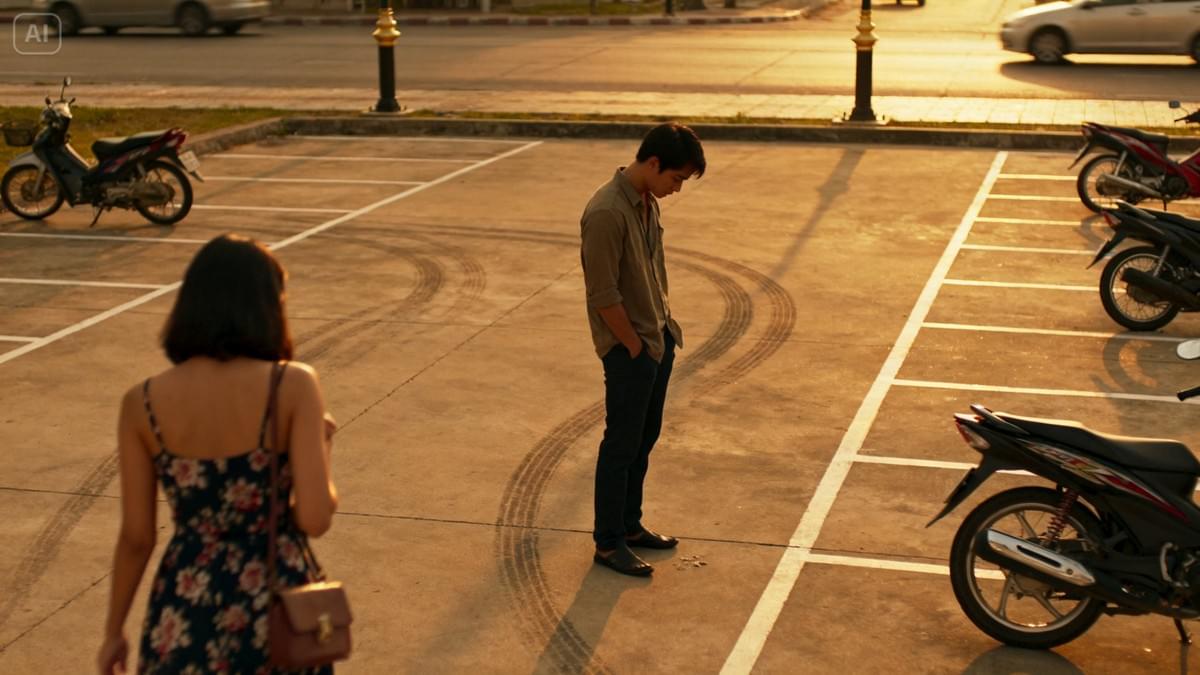
A New Approach: Zero Tolerance
Imagine a citywide campaign built around a simple message:
"No Illegal Exhausts. No Exceptions."
Under this system:
Any motorcycle found operating with an illegal exhaust modification would be immediately confiscated.
The owner would lose the vehicle permanently.
The illegal exhaust would be removed and destroyed.
The motorcycle would enter a government auction programme.
The rider would receive the flattened exhaust as a symbolic reminder of why the vehicle was seized.
The message would be clear.
The right to modify a vehicle ends when that modification negatively affects millions of other people.
The Symbolism of Crushing the Exhaust
Some may view the idea of crushing the exhaust as theatrical.
That is precisely the point.
Public policy often succeeds when it creates memorable symbols.
A flattened exhaust pipe serves as a powerful reminder that anti-social behaviour has consequences.
It transforms an illegal modification from a badge of pride into a symbol of failure.
Imagine social media images showing stacks of crushed exhausts collected each month.
Imagine news reports highlighting thousands of destroyed illegal pipes.
The visual impact alone would send a powerful message throughout the city.
Within a short period, riders would begin policing themselves.
Nobody wants to be the owner of the flattened exhaust hanging on a garage wall.
Funding the Future Through Auctions
One of the strongest aspects of the proposal is that enforcement can help fund positive change.
Rather than storing confiscated motorcycles indefinitely, the government could auction them.
Revenue generated from these auctions could be directed towards projects that improve urban life.
For example:
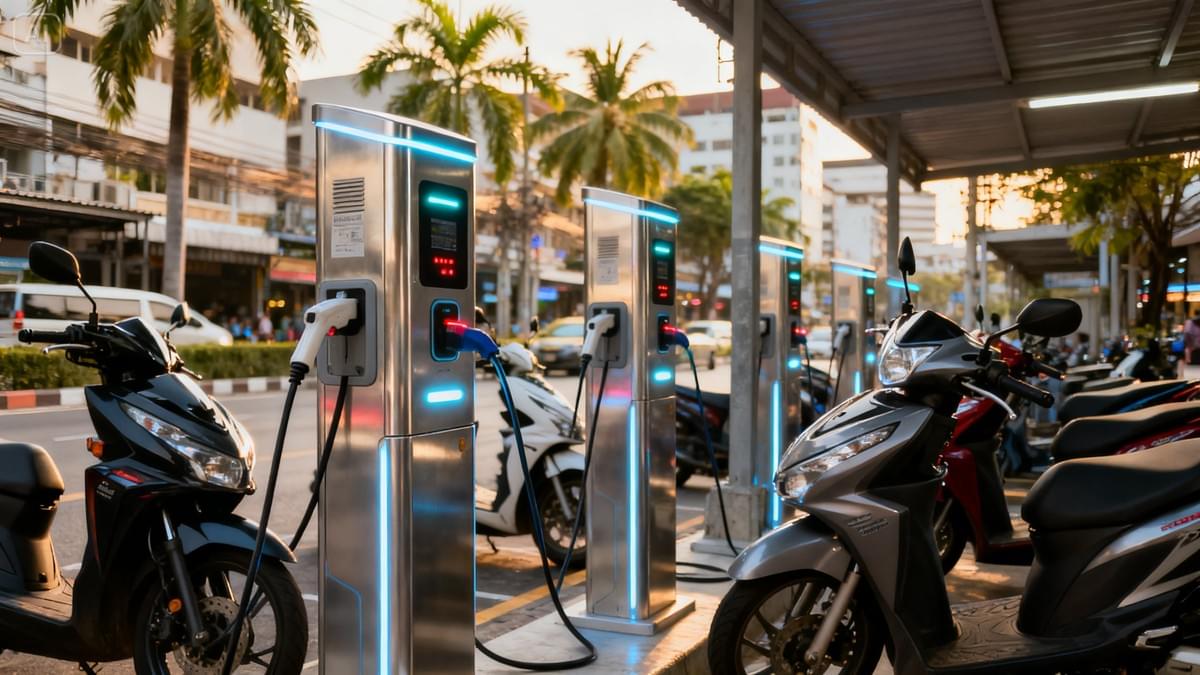
Electric motorcycle charging stations.
Battery-swapping infrastructure.
Noise monitoring systems.
Urban parks.
Quiet zones.
Community gardens.
Pedestrian-friendly public spaces.
School noise reduction projects.
Sound barriers near residential areas.
In effect, money generated from noisy vehicles would be redirected into creating a quieter and more sustainable city.
The principle is elegant.
Those who diminish public quality of life help fund projects that improve it.

Promoting Electric Motorcycles
Bangkok is well positioned to become a leader in electric two-wheel transport.
Electric motorcycles offer many advantages:
Lower operating costs.
Reduced air pollution.
Less maintenance.
Improved energy efficiency.
Most importantly, dramatically lower noise levels.
A city that aggressively discourages illegal exhausts while simultaneously investing in electric infrastructure sends a consistent message about its future direction.
The goal is not to eliminate motorcycles.
Motorcycles are an essential part of Bangkok's transportation network.
The goal is to encourage quieter motorcycles.
Technology already exists.
The transition simply requires leadership and incentives.
Creating a Culture of Consideration
At its core, this debate is not about motorcycles.
It is about respect.
Modern cities function because millions of people agree to certain shared rules.
We stop at red lights.
We avoid littering.
We keep public spaces clean.
We recognise that our freedom ends where it begins to negatively affect others.
Illegal exhausts violate this social contract.
A rider may enjoy the sound for a few moments.
Meanwhile, thousands of people may be disturbed throughout the day.
The balance is fundamentally unfair.
Cities thrive when people consider how their actions affect those around them.
Noise pollution is ultimately a question of courtesy.
Should one person's desire to make noise outweigh the comfort of everyone else?
Most residents would answer no.
Lessons from Other Cities
Around the world, cities are becoming increasingly serious about noise pollution.
Authorities have introduced automated noise cameras.
Some jurisdictions impose substantial penalties for excessive vehicle noise.
Others conduct targeted enforcement campaigns against modified exhausts.
The trend is clear.
As cities become denser, tolerance for unnecessary noise declines.
Bangkok has an opportunity to become a regional leader in urban quality-of-life policy.
Rather than waiting decades for gradual improvements, the city could take decisive action and establish itself as one of Asia's most liveable capitals.
The Economic Benefits of a Quieter City
Reducing noise is not merely a social objective.
It also has economic benefits.
Tourists enjoy quieter streets.
Businesses benefit from more pleasant commercial districts.
Property values often increase in less noisy environments.
Outdoor dining becomes more attractive.
Public parks become more usable.
Residents experience improved wellbeing and productivity.
A quieter city is often a more prosperous city.
When people enjoy spending time in public spaces, local economies benefit.
The return on investment can be substantial.
Addressing the Critics
Critics would likely argue that permanent confiscation is too severe.
That concern deserves consideration.
However, the scale of the problem must also be acknowledged.
A single illegally modified motorcycle may disturb tens of thousands of people over its lifetime.
The cumulative impact is enormous.
Furthermore, riders would have a choice.
Nobody is forced to install an illegal exhaust.
Nobody is forced to ignore noise regulations.
The consequence applies only after a deliberate decision to break the rules.
The policy would also need clear technical standards, transparent enforcement procedures, and an appeals process to ensure fairness.
But firmness and fairness are not mutually exclusive.
A well-designed system can achieve both.
A Vision for a Quieter Bangkok
Imagine waking up on a Sunday morning without being jolted awake by modified exhausts.
Imagine sitting in a park and hearing birds rather than engines.
Imagine children studying without constant interruptions from passing motorcycles.
Imagine outdoor cafés where conversation does not stop every few minutes because someone wants attention from a loud pipe.
This vision is entirely achievable.
Bangkok has transformed itself many times before.
It has expanded mass transit.
It has modernised roads.
It has developed world-class shopping, dining, and tourism infrastructure.
Reducing motorcycle noise is a smaller challenge than many the city has already overcome.
What is required is the political will to recognise noise pollution as a serious issue rather than an unavoidable inconvenience.
Conclusion
Illegal motorcycle exhausts impose costs on millions of Bangkok residents every day.
The current approach has failed to solve the problem.
A stronger strategy is needed.
Permanent confiscation of motorcycles fitted with illegal exhausts, combined with public destruction of the exhaust systems and auctioning of seized vehicles, would create a powerful deterrent while generating funds for quieter and cleaner transportation infrastructure.
The proposal is not anti-motorcycle.
It is pro-community.
It is pro-public health.
It is pro-quality of life.
Most importantly, it recognises a simple principle that every great city eventually embraces:
The freedom to make unnecessary noise should never outweigh the right of millions of people to enjoy peace and quiet.
By guest contributor Graham Stillwater
Need a quite place to stay in Bangkok? Visit our Properties section and email us for the latest advice and availability.
If you would like to grow awareness for this campaign idea, please share this page on your social media, or contact us for sponsorship or cost-free co-promotion ideas.