
A Bangkok Home for the Price of a Deposit in Scotland
Could two ordinary earners buy a small city base, spend Scotland’s darkest months in Thailand and build a little more freedom into life?
It is half three on a Scottish afternoon in January. The sky has gone dark, the rain is horizontal and you are wondering whether the central heating can be negotiated with like a hostage-taker. Somewhere between work, rent or a mortgage, and the weekly shop, another winter-sun escape can feel less like a plan and more like a fantasy.
Now imagine the question changing. Instead of asking whether you can afford a fortnight in Thailand, could you and one person you trust own a compact Bangkok base for roughly the kind of money many buyers need as a deposit in Scotland?
The comparison is not just clickbait. Registers of Scotland put the average Scottish property price at £195,000 in June 2026. A 20% deposit on that is £39,000. Noble’s April 2026 sales material for NUE Z-Square Suan Luang Station advertised prices from ฿1.8 million - about £40,000 using a deliberately round ฿45 to £1. The exchange rate moves, availability changes and purchase costs sit on top, but the scale of the idea is real.
This is not a get-rich-quick pitch. It is a practical question: can a relatively modest property give two people more control over where they live, how they spend winter and what they are building towards?
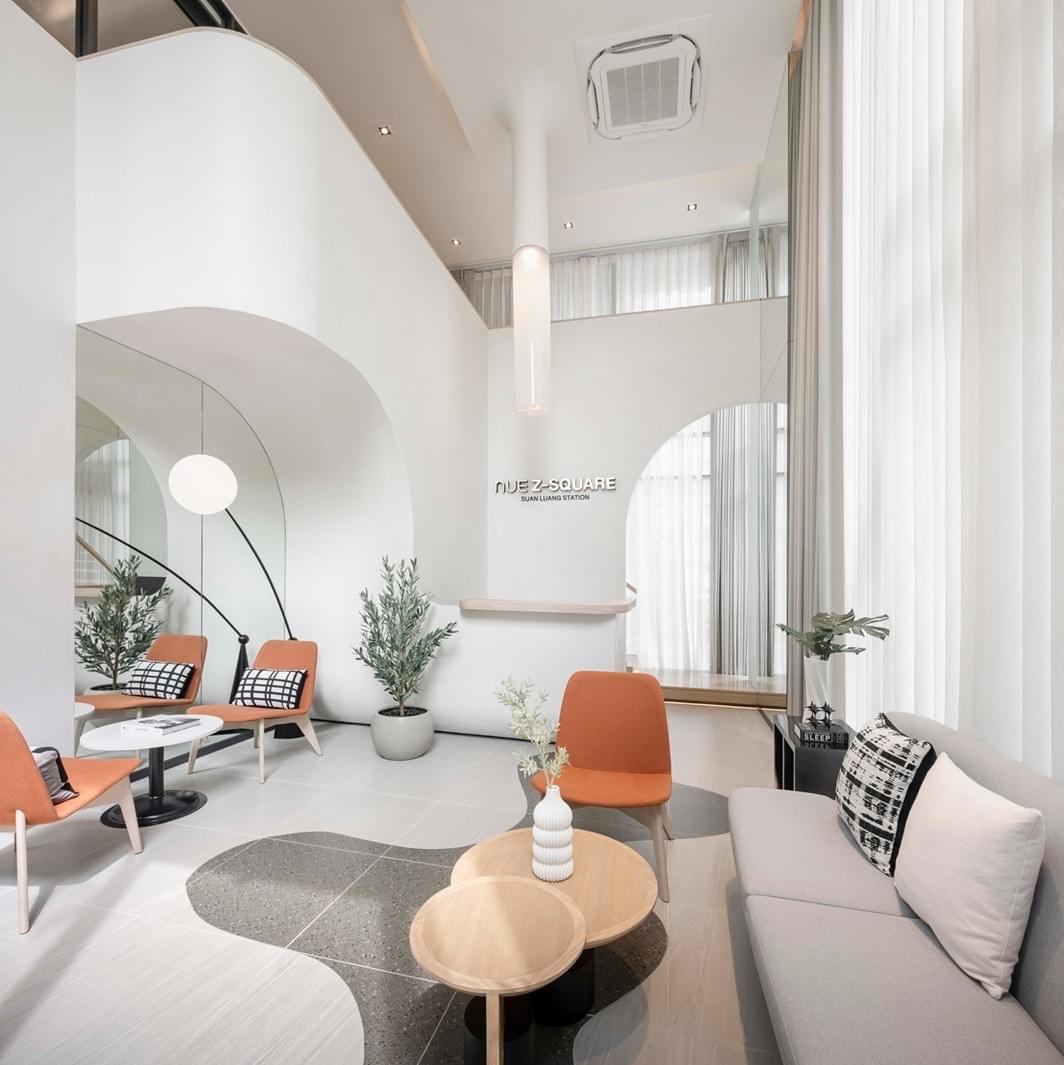
What does about £40,000 buy in Bangkok?
Let’s set expectations properly. It does not buy a riverside penthouse, a private plunge pool or a vast apartment in the middle of Sukhumvit. At NUE Z-Square, the entry-level proposition is a small studio or one-bedroom home in Suan Luang, in eastern Bangkok.
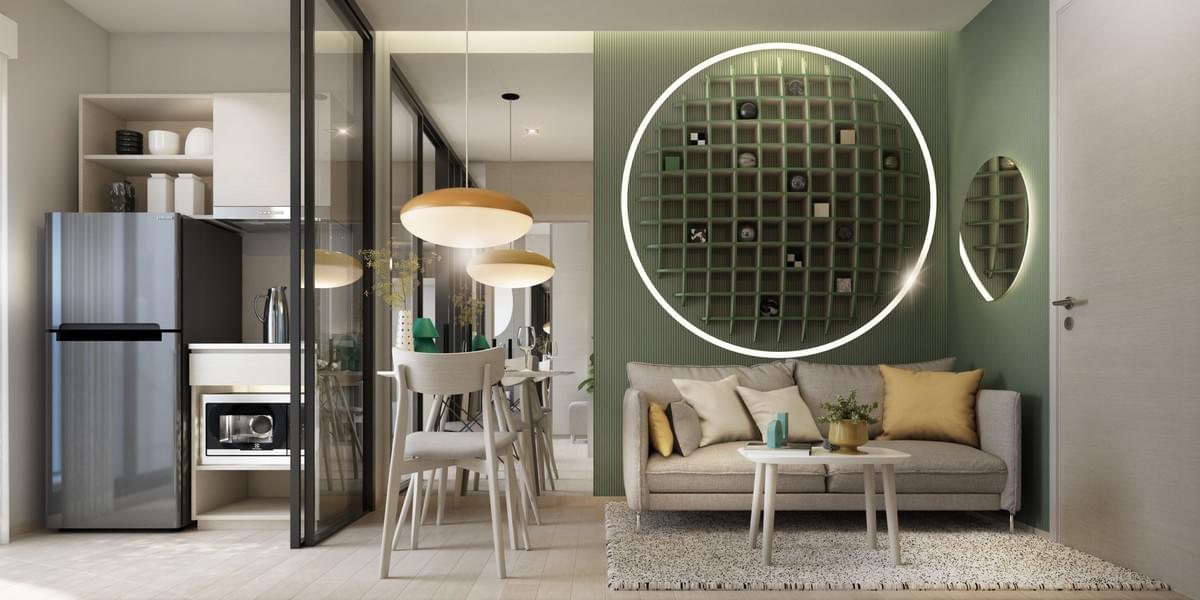
Project materials list studios of about 22.2 square metres and one-bedroom layouts from roughly 26.7 to 30.8 square metres. That is compact. If you are arriving with three wardrobes, two Labradors and a lifelong commitment to collecting kitchen gadgets, it will feel very compact indeed. But for one person, a couple or two co-owners using it at different times, a well-planned small unit can be a perfectly workable base.
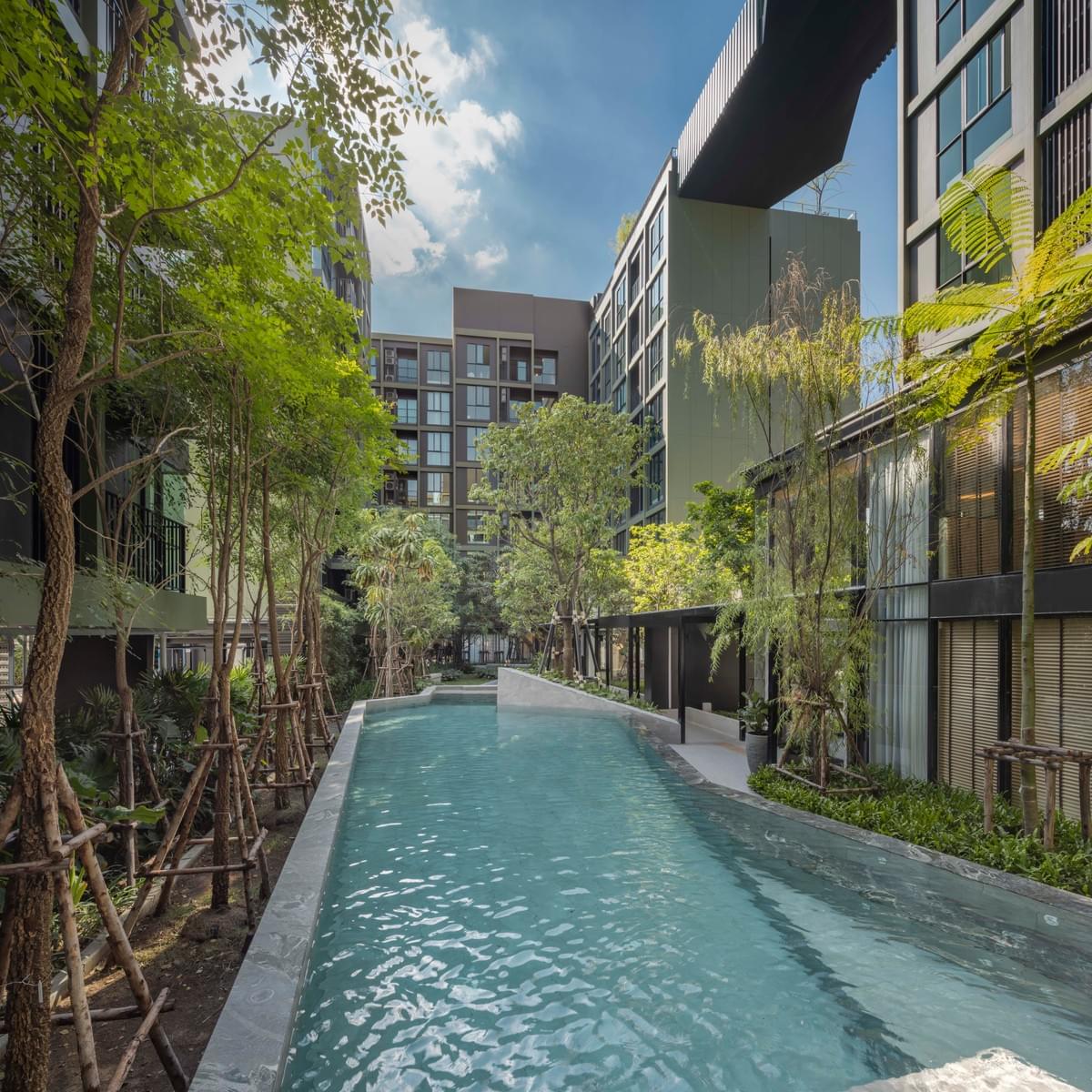
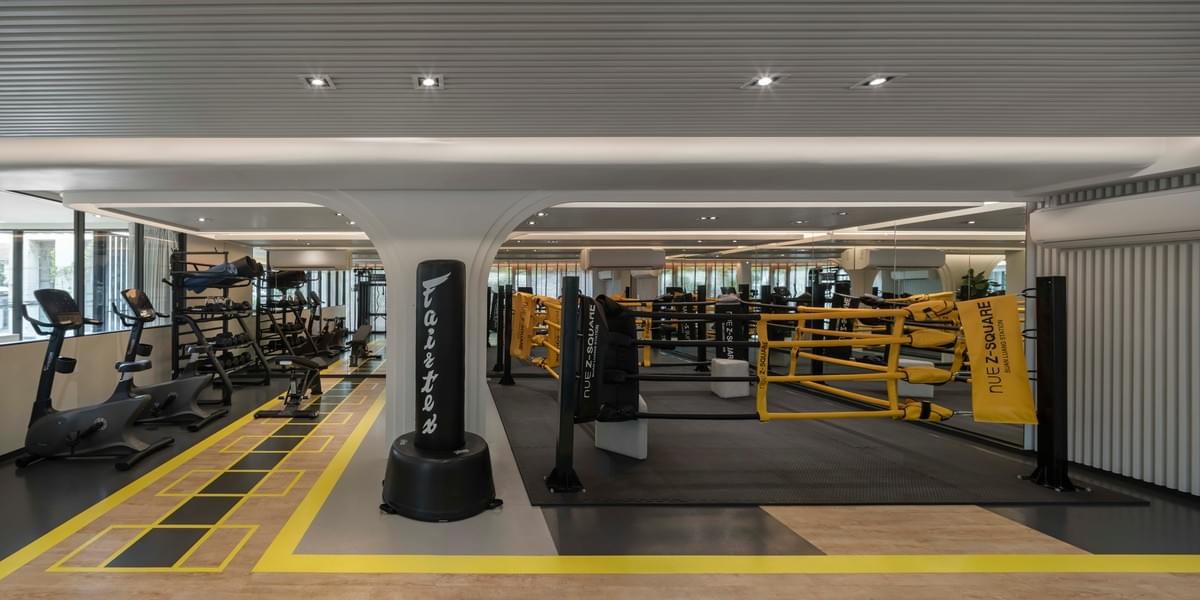
The development was completed in 2023 and has two eight-storey buildings with 289 units. The published facilities include a swimming pool, gym, laundry, creative or co-working space, rooftop gardens, security and key-card access. Current sales material also promotes a furniture package, although buyers should obtain the exact inventory for the specific unit rather than assume the brochure photograph is the contract.
The location is not inner-city Bangkok, and that is part of why the pricing is possible. Suan Luang is a lived-in Bangkok neighbourhood rather than a tourist bubble. The project is promoted as being a few minutes from the MRT Yellow Line at Suan Luang Rama IX and from Seacon Square, with a shuttle service. The train connection matters: Bangkok is exciting precisely because it is enormous, and an affordable home is far more useful when the rest of the city is reachable without sitting in traffic for half your life.
The two-owner version and vision
At the advertised ฿1.8 million starting point, a 50/50 split would be ฿900,000 each - roughly £20,000 per person at ฿45 to £1 - before legal fees, transfer costs, common fees, a sinking fund, exchange costs and any extras. For two siblings, close friends or a couple who already travel well together, that is a more imaginable number than £40,000 from one bank account.
It is still serious money. ‘Affordable’ should never be confused with ‘nothing’. Most overseas buyers should plan on a cash purchase rather than assume they will qualify for Thai finance, and nobody should empty an emergency fund to own a holiday flat. The attraction is that overseas ownership may be within reach of people on ordinary incomes who save together - not only cash-rich investors or people with family wealth behind them.
The practical model could be simple: one owner uses January to March, the other uses November and December, and they share a few weeks together. Or a couple of family members treat it as a common Bangkok base. When neither owner is there, they can consider a lawful longer-term tenancy or an approved management arrangement.
But friendship is not a contract. Noble’s reservation form contains fields for a primary and secondary purchaser, which is encouraging for a two-buyer structure, but both names, the ownership percentages and the title arrangement must be confirmed in writing before anyone pays a reservation fee. A Thai property lawyer acting for the buyers should also document:
who owns what share and how each purchase payment is evidenced;
how personal-use dates are allocated and changed;
who pays common fees, repairs, tax, insurance and unexpected bills;
whether the unit may be rented, who chooses the agent and how net income is split;
what happens if one owner wants to sell, cannot pay, dies, divorces or faces debt; and
how a buyout price and dispute process will work.
That agreement is not pessimism. It is what lets two people enjoy the place without every new decision becoming a referendum on the friendship.
The visa that makes six months realistic
A cheap condo would be much less interesting if you could only use it for brief holidays. This is where Thailand’s Destination Thailand Visa, or DTV, changes the conversation for remote workers, freelancers and people building location-independent businesses.
According to the Royal Thai Embassy in London, whose page was updated on 31 August 2026, the DTV currently has:
a £300 application fee;
five-year validity with multiple entries;
a stay of up to 180 days per entry; and
one extension per entry for up to another 180 days through Thai immigration.
For the DTV workcation category, the London embassy currently asks for evidence including UK, Irish or British Overseas Territories residence, funds of at least £12,000 (฿500,000), an employment contract or certificate or a professional portfolio showing eligible remote-worker, digital-nomad, foreign-talent or freelance status, and a police clearance issued within six months. The page also lists business registration or a business licence for self-employed applicants. Requirements can change and approval is never automatic, so use the embassy’s live checklist rather than an old social-media post.
There is also a DTV category for the spouse and children under 20 of a DTV holder, subject to its own evidence. Two unrelated friends, however, should assume they each need to qualify for their own immigration status.
Buying a condo does not grant a DTV, residency or the right to work for a Thai employer. Property and immigration are separate decisions.
One more grown-up point: count your days. Thailand’s Revenue Department says a person present in Thailand for more than 180 days in a calendar year is resident for personal-income-tax purposes. A DTV extension or several entries may therefore have tax consequences, including for foreign income brought into Thailand. Take advice covering both Thailand and the UK before assuming a six- or twelve-month lifestyle is tax-neutral.
Could this help you build an online business?
A change of country does not magically create customers, fix a weak offer or turn a laptop into passive income. Bangkok will happily provide a thousand distractions while you avoid doing the difficult bit. But it can offer a useful environment for someone already freelancing, working remotely or building an online business with a realistic plan.
You have strong mobile connectivity, cafés and co-working spaces across the city, a huge international community and easy regional travel. NUE Z-Square’s own creative or co-working area is a handy extra for days when the kitchen table loses its charm. Some everyday costs may be lower than in Scotland, particularly local food and transport, but imported goods, international health insurance, private healthcare, schooling and a very Western social life can close the gap quickly.
The deeper benefit is not ‘living like a king’. That phrase has always been daft. It is the possibility of reducing your accommodation uncertainty. If your Bangkok base is owned outright, your core housing cost while there becomes predictable: common fees, utilities, maintenance and tax, rather than six months of nightly hotel rates or short-term rents. Predictability can buy breathing room, and breathing room can be valuable when you are trying to build work that travels with you.
Can it produce rental income?
Potentially, yes - but start with the boring questions: who is the likely tenant, what rent is supported by comparable units, what is the expected vacancy, which leases are lawful, what does the condominium juristic person permit, and who handles repairs when you are in Glasgow?
Do not base the purchase on nightly Airbnb-style income. Short stays can engage hotel-licensing rules and building restrictions. A compliant longer-term tenant or an approved professional management arrangement is the more sensible assumption unless your lawyer and the building confirm otherwise.
Noble’s April 2026 material gives one standard-purchase illustration for a 27.17-square-metre unit priced at ฿1.927 million. It assumes ฿10,000 monthly rent and, after the listed costs but before tax, shows annual net rent of ฿91,780 - a 4.76% illustrative net yield. That is a developer example, not an independent valuation and not a guaranteed result. Actual rent, occupancy, expenses, exchange rates and resale value can all move in the wrong direction.
And what is Noble’s “7% net” programme?
This needs to be separated from ordinary ownership because the headline can otherwise mislead. The same sales kit describes a Buy-to-Let programme in which a buyer contributes 50% of the unit price and Noble advertises a 7% net return on that contribution for five years. In its ฿1.927 million worked example, the buyer contributes ฿963,500 and receives ฿67,500 a year, including the stated return-protection amount.
That is not a 7% yield on the full ฿1.927 million property value. Nor is Noble’s 50% buyer contribution the same thing as two friends each owning 50% of a normal purchase. The programme also has its own possession, opt-out, rental-management and title-transfer mechanics. If your priority is spontaneous personal use, ordinary full ownership may fit better. If your priority is hands-off income, the programme may deserve investigation - but only using the current contract for the exact eligible unit, with independent legal and tax advice.
What foreign buyers must check
Foreigners can own qualifying condominium units in Thailand, but the legal structure matters. Thai government guidance explains that combined foreign ownership may not exceed 49% of the condominium’s total unit area, and that purchase money normally needs to come from overseas with the correct banking evidence. See the Thai government overview and have a lawyer verify the live foreign quota and transfer documents for this project.
This point is especially important for two owners. Both should ask how their individual remittances, names and shares will appear in the contract, Foreign Exchange Transaction evidence and title deed. Do not let a marketing phrase such as ‘leasehold solution’ blur the difference between registered foreign freehold, leasehold rights and a managed investment arrangement. They are not interchangeable.
The current reservation paperwork also calls for a ฿100,000 booking payment, a sale-and-purchase agreement and 30% down payment within 15 days, followed by the final 70% within 60 days. Confirm the schedule for the chosen unit before signing and do not reserve until funds, ownership structure and due diligence are ready.
The honest drawbacks
A fair review should make it easy to say no. This idea is probably wrong for you if you dislike heat, need lots of personal space, expect a central tourist-zone address, may need your capital back quickly or cannot tolerate the admin of owning in another legal system.
Bangkok can be brutally hot. The rainy season is real, and dry-season air quality can be poor. A 22-square-metre studio will not become bigger because the pool looks good on Instagram. Currency movements can make costs and returns feel very different in pounds. Rental periods can clash with the exact months you want to visit. Selling may take time, and nobody can promise a profit.
Joint ownership adds another layer: a brilliant travel pal is not automatically a brilliant financial partner. And while the DTV is unusually attractive, visa and tax rules can change during a five-year plan.
Those are not reasons to dismiss the idea. They are reasons to buy only if the unit works on conservative numbers and the lifestyle still appeals when the novelty is removed.
So, is it great value?
For the right two people, I think it can be. Not because ฿1.8 million is ‘cheap’ in the abstract, and not because a brochure yield will rescue anyone from work by next Tuesday. It can be great value because it combines three things that are rarely available at the same entry price: an owned base in a major world city, a credible route to spending long stretches in Thailand, and the option - subject to the rules and the market - to earn income when you are elsewhere.
The strongest buyer is not chasing a miracle. It is someone who already likes Bangkok, can leave the purchase money invested for years, has cash reserves after completion, understands the small-unit compromise and wants the property even if rent or resale growth is merely ordinary.
For two Scots on normal incomes, that could mean holidays without paying for a hotel every time. It could mean swapping part of the dark season for warm evenings, street food and a city that feels permanently awake. It might give a remote worker a stable Asian base while they build something of their own. And, eventually, it could become one useful asset among several rather than another year’s travel spend disappearing from the bank account.
A Bangkok studio will not set you free on its own. But bought carefully, with someone you trust, it may give you a little more freedom to choose what the next decade looks like.
Before paying a baht
Visit the project and the neighbourhood at different times of day.
Request the live unit list, exact all-in price, furniture inventory and foreign-quota confirmation.
Compare achieved long-term rents in the building, not only advertised asking rents.
Choose ordinary ownership or the separate Buy-to-Let programme deliberately; do not blend their numbers.
Have an independent Thai lawyer review title, contract, co-ownership agreement, remittance evidence and exit terms.
Take UK and Thai tax advice, check insurance, and confirm your visa independently.
Keep an emergency fund in addition to the purchase money.
Disclosure and disclaimer: Prime Property Thailand is a partner of Noble and can introduce buyers to NUE Z-Square. This article is general information, not financial, legal, tax or immigration advice. Prices, unit availability, exchange rates, visa rules and programme terms can change. Buyers should obtain current documents and independent professional advice before committing.
Editorial source notes - references
Property figures below come from the Noble/NUE partner materials supplied for this commission; public claims link to primary or official sources.
Noble Development, “2026 Apr_Nue Z Square (Buy To Let)_Sales kit_EN.pdf”: Starting price ฿1.8m; project positioning, facilities, location claims; standard purchase and Buy-to-Let worked examples.
NUE Z-Square project sales kit and unit plans: Completion October 2023; 2 buildings, 8 floors, 289 units; studio 22.20 sqm; one-bedroom layouts approximately 26.70-30.80 sqm.
Noble NUE Z-Square reservation form: Primary and secondary purchaser fields; ฿100,000 booking fee; stated 30%/15-day and 70%/60-day payment timetable. Confirm the current form and unit-specific schedule.
Royal Thai Embassy, London - Destination Thailand Visa
Registers of Scotland - UK House Price Index figures for Scotland, June 2026
Thailand Revenue Department - Personal Income Tax
Thailand Government - Foreign property ownership overview
Thailand Board of Investment, OSOS - Land and condominium ownership
Fact-check date: 3 September 2026. Currency examples use a deliberately rounded rate of ฿45 to £1; they are illustrative, not a quote. At that rate, ฿1.8m is £40,000 and a 50/50 split is £20,000 per owner, before costs.